What was behind the ‘I Love Muhammad’ movement? Explained
The Live Info Media
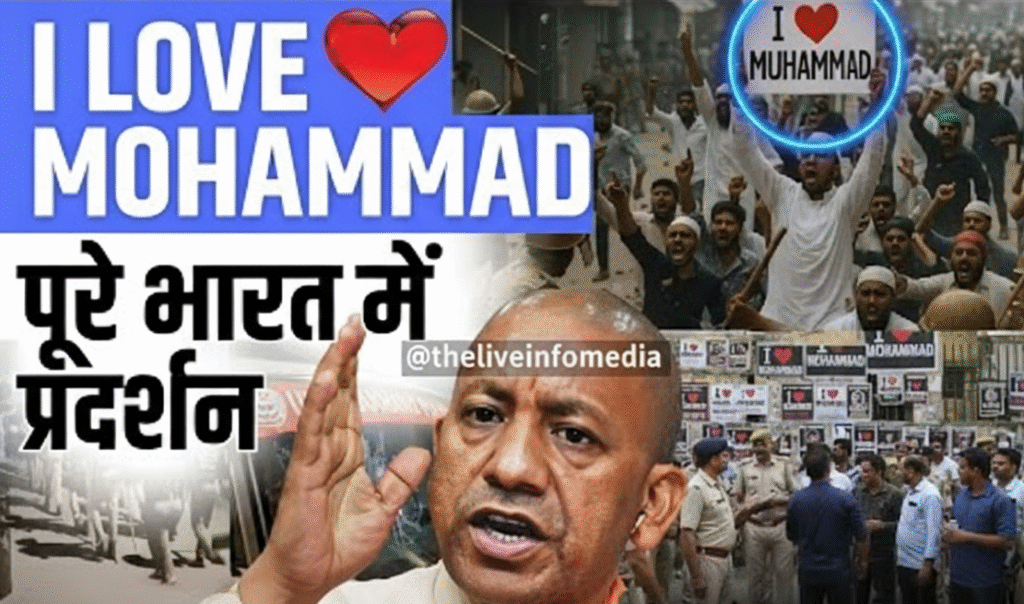
The ‘I Love Muhammad’ controversy, which began in Kanpur, Uttar Pradesh, has sparked protests and processions by the Muslim community across multiple states, including Uttar Pradesh, Uttarakhand, Telangana, and Maharashtra. Cities such as Unnao, Bareilly, Kaushambi, Lucknow, Maharajganj, Kashipur, and Hyderabad have witnessed rallies and street demonstrations, some leading to clashes with police.
The ‘I Love Muhammad’ Controversy: A National Dispute
The ‘I Love Muhammad’ slogan, which initially became a point of contention during a religious procession in Kanpur, Uttar Pradesh, has escalated into a major nationwide controversy. This dispute has triggered protests, processions, and, in some cases, clashes with police by the Muslim community across several states. The core of the issue revolves around religious expression, legal restrictions on public demonstrations, and maintaining communal harmony.
The Spark: A Banner in Kanpur
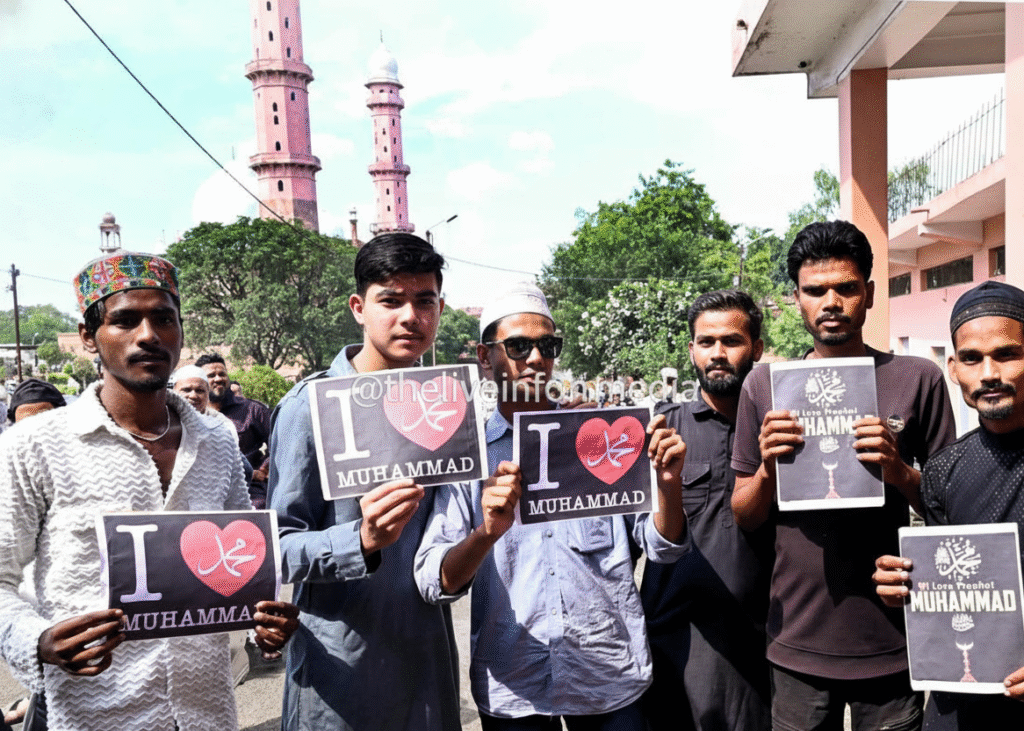
The entire controversy originated on September 4th during the Barawafat (Eid-e-Milad-un-Nabi) procession in Rawatpur, Kanpur. A group participating in the procession displayed an ‘I Love Muhammad’ banner. Local Hindu groups objected to this, arguing that it was a “new tradition” being introduced to the established procession route. Police quickly intervened, citing government rules that prohibit introducing new customs into religious processions. While the police clarified that the FIR was not against the slogan itself, but against the act of setting up a new site for the banner and an alleged poster-tearing incident, the action fueled a widespread reaction.
Escalation and Political Reaction
The dispute escalated significantly on September 9th when Kanpur police registered cases against 24 people for allegedly introducing a new custom and disturbing communal harmony. The controversy garnered national attention after AIMIM chief Asaduddin Owaisi publicly defended the slogan on September 15th, stating that saying “I Love Muhammad” is not a crime and criticizing the police action. Despite the police’s clarification that the cases were for logistical rule violations and damage to property, the narrative that Muslims were being penalized for expressing love for their Prophet quickly spread.
Protests Spread Across States
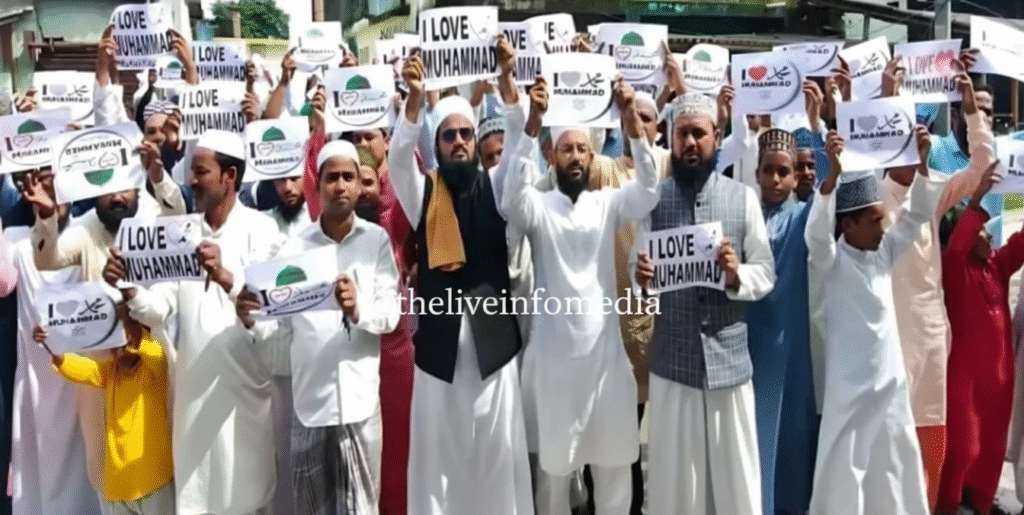
The backlash to the Kanpur FIR led to mass mobilization. Numerous cities across multiple states witnessed rallies, with protesters holding ‘I Love Muhammad’ banners and chanting religious slogans.
- Uttar Pradesh: Processions and clashes were reported in Unnao, where police faced stone-pelting, leading to 8 FIRs. In Maharajganj, police preemptively seized vehicles and filed a case against 64 people to prevent a procession. Disturbingly, a viral video from Kaushambi showed youths chanting the offensive ‘Sar tan se juda…’ slogan in response to the Kanpur events, leading to dozens of detentions.
- Other States: Protests also erupted in states outside of UP, including a peaceful demonstration by Muslim women in Lucknow. In Nagpur, Maharashtra, political and social groups held protests against perceived criticism of the Prophet. In Kashipur, Uttarakhand, an unauthorized procession turned violent, resulting in clashes with police, stone-pelting, and property damage.
Political and Religious Responses
The issue has drawn sharp reactions from political and religious figures. Samajwadi Party spokespeople defended the freedom of expression, equating it to the right to say “I Love Ram.” Meanwhile, the BJP asserted that any attempt to break the law or target police would be met with swift action. Religious leaders from organisations like the Jamat Raza-e-Mustafa and the World Sufi Forum, while condemning violence, have called for calm and emphasized the need to respect constitutional rights and maintain communal harmony. Owaisi’s framing of the issue as a defense of religious freedom resonated widely within the community.
Conclusion
What started as a localised disagreement over a banner’s placement in Kanpur has morphed into a national debate about the limits of religious expression in public spaces and the government’s role in maintaining order. The dispute, fueled by social media and political commentary, continues to pose a challenge to communal harmony, with law enforcement agencies across affected states taking action to prevent further escalation and monitor for misinformation.