Delhi Smog Reaches Emergency Levels
The Live Info Media
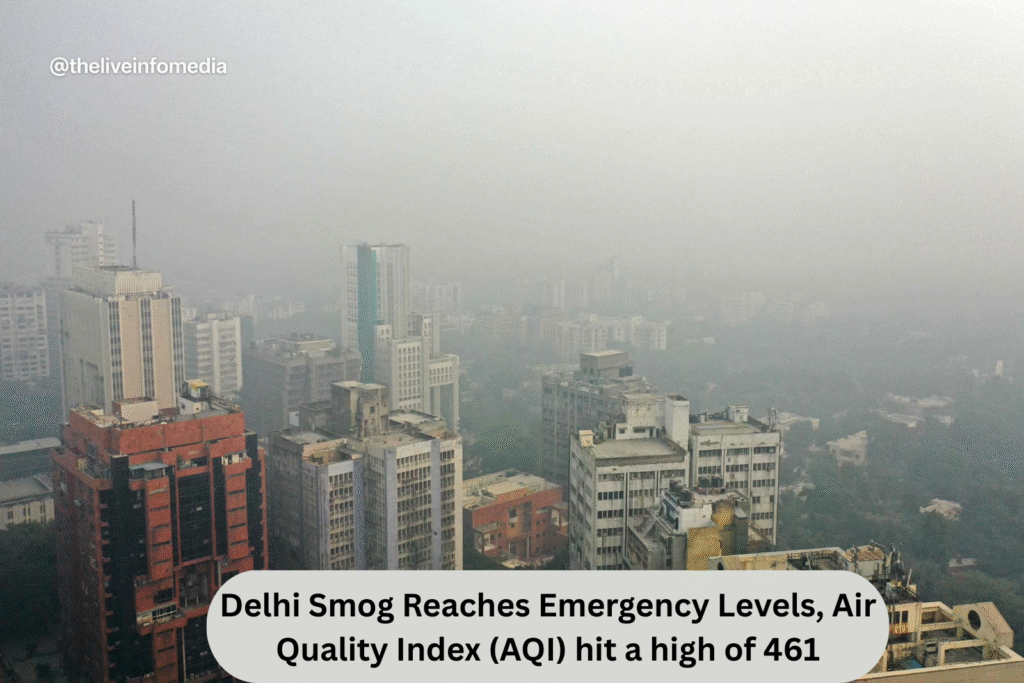
Delhi and the National Capital Region (NCR) are facing the worst air quality of the season. On Sunday, the Air Quality Index (AQI) hit a high of 461, with some areas like Wazirpur crossing the 500 mark. This level of pollution is classified as “severe,” meaning it can seriously impact people with existing diseases and affect even healthy individuals. The rising smog has led to an increase in hospital cases, especially among children and the elderly.
Toughest Bans Imposed Under GRAP-IV
In response to the dangerous smog, the Centre’s Commission for Air Quality Management (CAQM) triggered the most severe emergency measures, known as Stage-IV of the Graded Response Action Plan (GRAP), on Saturday, December 13, 2025. These tough rules are meant to immediately control pollution sources across Delhi, Gurugram, Faridabad, Ghaziabad, and Gautam Buddha Nagar.
What is Banned: Vehicle and Construction Curbs
The emergency measures include strict bans to reduce smog-causing activity:
- A complete stop on construction and demolition work across the entire NCR.
- A ban on the entry of non-essential trucks into Delhi.
- A ban on BS-III petrol and BS-IV diesel four-wheelers in Delhi and the four adjoining NCR districts.
Schools and Offices Adjust Operations
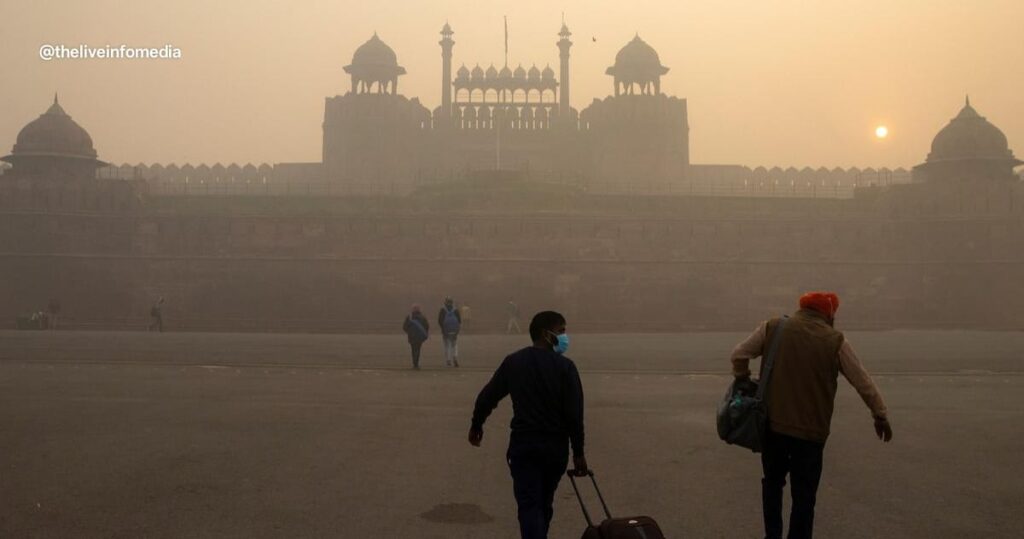
The poor air quality also impacts daily life and operations. Authorities directed schools in the Capital and the four adjoining districts to hold classes in a hybrid mode (either physical or online), except for students in Grades 10 and 12. Additionally, the Delhi government required all government and private offices to operate with only 50% of their staff present in the office to reduce traffic and emissions.
Government Takes Action, Experts Point to Weather
Chief Minister Rekha Gupta launched a round-the-clock campaign called #WarAgainstPollution, which involves using water sprinklers and road sweeping to control dust. However, pollution monitoring agencies stated that the sudden spike was mainly due to unfavorable weather conditions, specifically feeble winds and increased moisture, which trap pollutants close to the ground, leading to smog formation.
Political Controversy and Future Outlook
The Opposition Aam Aadmi Party (AAP) criticized the central government, alleging a failure to seriously address the public health crisis. The pollution monitoring agency forecasts that the air quality is likely to remain “severe” on Sunday but may show a marginal improvement over the subsequent two days as weather conditions slightly change. Experts, however, continue to stress the need for long-term, regional solutions that go beyond seasonal emergency restrictions.